
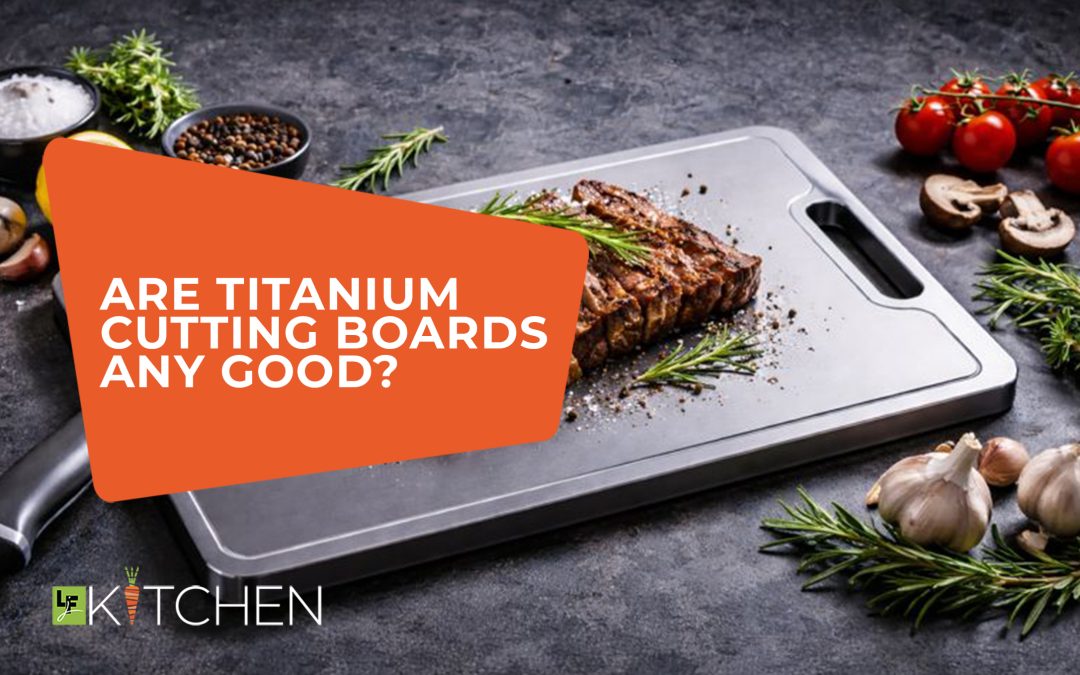
Titanium Cutting Boards, A Trend That Looks Good, but Misses the Mark
Every so often, a new kitchen “innovation” goes viral. Titanium cutting boards are the latest example. They look sleek. They sound advanced. And they promise durability.
But here’s the reality: titanium cutting boards are terrible for your knives and introduce unnecessary safety risks especially if you care about proper food prep.
Trends come and go. Fundamentals don’t.
If you care about:
- Knife longevity
- Kitchen safety
- Clean food preparation
- Long-term value
Skip the titanium. Choose materials that work with your tools, not against them.
At Local Fare Jax, we believe good food starts with good practices from the farm all the way to your cutting board.
3 Reasons we do not recommend titanium cutting boards.
1. They Destroy Your Knives
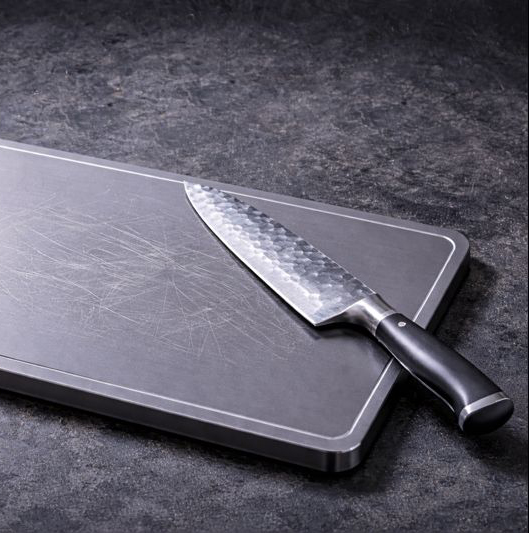
Titanium is significantly harder than the steel used in quality kitchen knives. Every cut accelerates blade wear, forcing you to sharpen more often and shortening the life of your knife. A cutting board should protect your blade, not grind it down.
2. Slippery Surfaces Are a Safety Hazard
Titanium boards lack grip—both on the counter and with food. When food slides, hands follow. That loss of control increases the risk of accidents, especially during fast prep. Stability matters in the kitchen.
3. Durability Isn’t the Goal
Yes, titanium lasts forever. But longevity alone doesn’t make a good cutting board. The purpose of a cutting board is to absorb impact, preserve knife edges, and create a safe working surface. Titanium fails on all three.
What We Actually Recommend
Recommendation #1: Japanese-Style Rubber Cutting Boards
Used by professional chefs worldwide, Japanese rubber boards are engineered to protect knives while remaining hygienic and stable. They offer:
- Excellent knife-edge preservation
- Non-slip grip
- Easy sanitation
- Long service life without blade damage
They’re one of the best all-around choices for serious home cooks.
Recommendation #2: End-Grain Hardwood Cutting Boards
End-grain boards made from hard woods like maple or walnut allow knife edges to sink between wood fibers, which then close back up. This reduces wear on knives and extends the life of the board. Clean with hot water, dry properly, and they’ll last for years.
What about bamboo cutting boards?
Bamboo boards are often marketed as eco-friendly, but they rely heavily on industrial adhesives to bind strips together. Those glues are hard on knives and can degrade over time.
Good intentions, questionable execution. Similar to paper straws: marketed as “better,” but often worse in practice.
Now we aren’t completely against them, but there are much better options out there. Not all bamboo cutting boards are made equally with some using higher quality glues. Bamboo is great because it is antimicrobial but it gets a solid #3 on our list of cutting boards to use.
Hungry? We can help with that!
Here are some options for rubber cutting boards:
Asahi Cookin’ Cut Antibacterial Rubber Cutting Board
https://cutleryandmore.com/products/asahi-cookin-cut-antibacterial-rubber-cutting-board-41640
Asahi Cookin’ Cut Rubber Cutting Board (Pro Grade)
https://cutleryandmore.com/products/asahi-cookin-cut-antibacterial-rubber-cutting-board-41641
Hasegawa Pro-Soft Lite Rubber Cutting Board (Wood Core)
https://mtckitchen.com/products/hasegawa-frk-wood-core-soft-rubber-cutting-board
Hasegawa Pro-Soft Lite Cutting Board (Large)
https://carbonknifeco.com/products/hasegawa-frk20-4429-cutting-board
Yoshihiro Hi-Soft High Performance Cutting Board
https://www.echefknife.com/products/hi-soft-high-performance-professional-grade-cutting-board
Tenryo Hi-Soft Cutting Board (Budget Option)
https://www.korin.com/Tenryo-Hi-Soft-Cutting-Board